

 by Paige Cerulli
6 Best Practices for Improving Resident Participation in Chair Yoga and Low-Impact Conditioning
Physical conditioning can help seniors improve their strength and endurance while maintaining stability, with accessible options like chair yoga and low-impact exercises making it easier for residents to participate. While some residents may be initially hesitant or skeptical about participating, many tend to enjoy chair yoga and low-impact conditioning classes once they experience them.
Given the many benefits that low-impact conditioning classes offer, encouraging more residents to participate should be a priority. These best practices may help.
1. Identify the Reasons Why Residents Hesitate

Emily Harkness, fitness manager at Westminster at Lake Ridge, an Ingleside Community
Understanding why residents might not want to participate in classes can help you develop practical solutions to engage them. Emily Harkness, fitness manager at Westminster at Lake Ridge, an Ingleside Community, says some residents feel that a class’s intensity isn’t high enough to provide meaningful benefits. “There is sometimes a misconception that they need to be sweating or working at a high intensity in order for exercise to be effective,” she explains.
Other residents may have difficulty quieting their minds and fully relaxing into the movements of chair yoga.
Overall, Harkness has found that the greatest barrier to resident participation tends to be time and accessibility, including finding a convenient time for classes and ensuring that residents can easily get to the class to participate.
2. Structure Classes to Be Welcoming from the Start
Classes should be designed to help residents feel welcome and included from the very beginning. At Power for Parkinson’s, class instructors use an icebreaker to begin classes, according to Dr. Nina Mosier, co-founder and executive director at Power for Parkinson’s. Instructors also fill each session with motivational statements, such as “I know you might be getting tired at this point, but let’s do one more.” Instructors also incorporate seasonal references, such as doing “draw a heart with our arm” exercises during February classes.
Harkness takes a thoughtful approach to starting each class, introducing herself and checking in with participants about any preexisting conditions, physical limitations, or concerns she should be aware of. “I remind everyone that they should listen to their bodies and that if a movement does not feel right, they should stop and focus on their breathing or follow the modification provided until we move on to the next exercise,” she says. “After class, I check in with participants to see how they are feeling and ask for their thoughts and feedback about the class.”
3. Consider Using Music and Humor to Create a Social Atmosphere
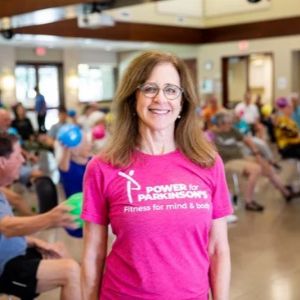
Dr. Nina Mosier, co-founder and executive director at Power for Parkinson’s
Creating a social and positive atmosphere is particularly important for new participants, who are more likely to return for future classes when they feel comfortable and included. Music can play a key role in creating that atmosphere, helping to energize participants and make classes more enjoyable.
“Music is everything,” says Mosier. She notes that fast beats and music from the 80s can be particularly motivational for older adults.
Long-time Power for Parkinson’s instructor Lauren Lewis has found success in using humor and self-deprecating remarks during classes. For example, Lewis, who is 70, might remark, “This is hard for me, too!” as she teaches. The remarks add levity and help keep classes lighthearted and fun.
4. Ask for Feedback
Actively seeking resident feedback and incorporating their input can help encourage ongoing participation in classes. “I want each attendee to know that their opinions matter and that we are willing to make adjustments, when possible, to help the class meet their needs,” Harkness explains. She’s found that participants are more likely to return when they feel their feedback is valued and see that classes are tailored to their needs.
5. Change Things Up
Even the most fun classes can start to feel stale if they’re too repetitive. Harkness notes that in her organization, instructors vary class formats and music selections to keep participants engaged. They also check in with residents during each session to learn about their preferences and identify any areas of the body they would like to focus on. “Incorporating their feedback allows us to keep the classes fresh while also making participants feel that they have a voice in the experience,” she says.
6. Carefully Schedule Classes
Finding the right class schedule and duration is essential, but it can take some trial and error. Mosier has found that 10:00 am tends to be a good time for classes, and she limits classes to half an hour.
Similarly, Harkness finds that the mid-morning time frame between 9:00 and 11:00 am tends to generate the best turnout. “It is early enough that most residents are up and ready to start their day, but it is not so late that the class begins to conflict with afternoon appointments, activities, or other obligations,” she explains.
Once an effective schedule is established, maintaining consistency can help classes become a regular part of residents’ routines. “Once the class becomes part of their routine, it becomes more than just another activity–it becomes a regular part of their week,” says Harkness. “Some participants have expressed that their week feels a little off when they are unable to attend. Seeing exercise become something they look forward to is one of the most rewarding changes to observe.”
Paige Cerulli is a contributing writer to i Advance Senior Care.
Related Articles









Topics: Activities , Featured Articles , Operations