

 by Paige Cerulli
Raising the Bar: How a Culture of Continuous Improvement Drives Better Senior Care
Providing exceptional senior care requires more than maintaining high standards. It calls for an ongoing commitment to learning, adapting, and finding new ways to better serve residents. By fostering a culture of continuous improvement, senior care communities can build on proven practices, apply lessons learned, and strengthen the quality of care they provide.
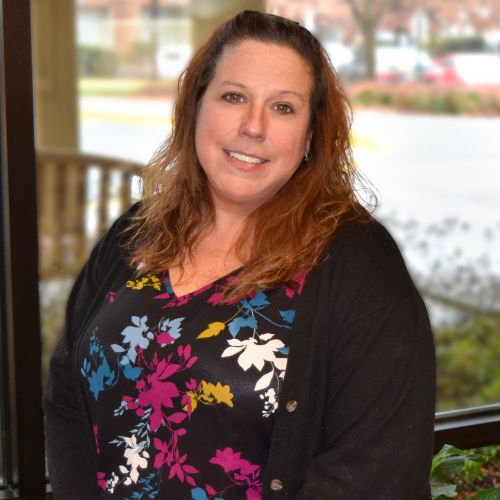
Susan Boettger, senior director, clinical excellence at Charles E. Smith Life Communities
In this article, Susan Boettger, senior director, clinical excellence at Charles E. Smith Life Communities, shares how her community cultivates this mindset, navigates challenges, and uses continuous improvement to support top-quality care.
Read on for insights on how your organization can gather meaningful feedback, empower employees to drive change, navigate challenges, and build a sustainable culture of continuous improvement.
What a Culture of Continuous Improvement Looks Like
At Charles E. Smith Life Communities, continuous improvement starts with curiosity and a willingness to keep asking “why.” The approach brings together perspectives from across disciplines, roles, and levels of experience. “It’s collaborative, drawing perspectives from every discipline regardless of role or tenure, and associates are encouraged to speak up freely,” says Boettger. “Executive leadership actively models this commitment, not just endorses it. Accountability underlies all of it: every associate owns their role in identifying problems and following through on solutions.”
Staff are encouraged from day one to identify problems and suggest improvements. Beginning with orientation, staff hear the phrase, “If you see it, hear it, or suspect it, say something,” reinforcing the expectation that everyone has a role in identifying concerns and opportunities for improvement.
The community’s Clinical Excellence team also maintains a visible presence across every shift, giving associates an approachable point of contact. “We model curiosity with leaders and supervisors—asking why, how, who, when, and what’s been tried—so they pass that mindset to their teams,” Boettger explains. Managers are also expected to close the loop with associates who raise concerns.
Turning Feedback and Data Into Meaningful Improvements
Because people learn and communicate in different ways, Charles E. Smith Life Communities provides multiple opportunities for residents, families, and associates to share feedback. These include town halls, one-on-one conversations, leadership rounds, resident councils, third-party surveys, anonymous digital surveys, and a family and resident communication platform. The community also has an anonymous hotline, social media, and an open-door leadership policy to encourage feedback.
Feedback is also incorporated into a structured Quality Assurance Performance Improvement process that spans all departments across the organization’s nursing home and assisted living residences. Similar concepts and designs guide the Safety Management Team and Infection Control Committee meetings, which include representatives from different disciplines and residences.
Associates bring both data and feedback to these committees, allowing teams to examine trends, make comparisons, and identify potential correlations. This broader view can help the organization better understand issues and develop more comprehensive approaches to improvement.
Fostering an Environment Where Employees Feel Supported
Creating a culture where employees feel comfortable sharing ideas, concerns, and constructive criticism requires consistent support from leadership. Leaders must demonstrate through their actions that feedback is genuinely welcomed and valued. “Leaders have to genuinely believe in this culture, not just endorse it short-term,” explains Boettger. “They need to be visible, approachable, and model it directly—taking risks, asking questions, and staying receptive to feedback, including real listening that reflects back what they heard.”
Being receptive to feedback also means remaining open to change and differing opinions, while maintaining accountability for what happens next. Employees need to see that raising a concern consistently leads to a response. “Leaders who solicit feedback but don’t act on it erode trust fast,” says Boettger. Following through helps reinforce that employee input matters and encourages associates to continue contributing ideas.
Recognition provides another way to encourage associates to take an active role in improvement. Charles E. Smith Life Communities highlights associates through its engagement platform and social media channels, as well as in a biannual magazine produced by the resource development team.
The organization also recognizes contributions through nomination-based Associate of the Month and Associate of the Year programs, which include tangible and financial rewards. Associates can take their involvement a step further by pitching and leading their own resident quality-of-life initiatives through the community’s philanthropic grant program, giving employees an opportunity to turn promising ideas into meaningful improvements.
Sustaining Improvement Through Workforce and Regulatory Challenges
Even with a strong culture in place, senior care communities must navigate external pressures that can complicate continuous improvement efforts. Shifting regulatory requirements, for example, are often well-intentioned but can produce unintended consequences. Early pandemic visitation restrictions helped protect residents from the virus, but they also contributed to isolation and its effects.
Workforce shortages present another significant challenge because even well-designed improvement programs depend on consistent frontline participation. “An unstable frontline workforce is our biggest threat to sustaining quality and improvement, even with strong programs in place,” explains Boettger.
Maintaining clear accountability can help preserve a culture of improvement during periods of change and uncertainty. “Consistent expectations at every level are what let residents, families, and associates trust the culture will hold even as circumstances shift,” she adds.
Starting Small to Build Lasting, Organization-Wide Change
A strong culture of continuous improvement can help senior care communities consistently deliver high-quality care while continuing to raise their standards. Building that culture, however, requires patience and a willingness to make progress incrementally. “Start small,” Boettger advises. “Focus on one area and then once improvements have been made successfully, go back, learn from what was done, and then take what was learned and done and apply it to another area of focus.”
Over time, those individual improvements can become lessons that benefit the entire organization. By evaluating what worked, applying those insights to new areas, and repeating the process, senior care communities can turn continuous improvement into a sustainable, organization-wide practice that strengthens the resident experience and the quality of care.
Paige Cerulli is a contributing writer to i Advance Senior Care.
Related Articles








Topics: Executive Leadership , Facility management , Featured Articles , Leadership , Operations , Staffing