
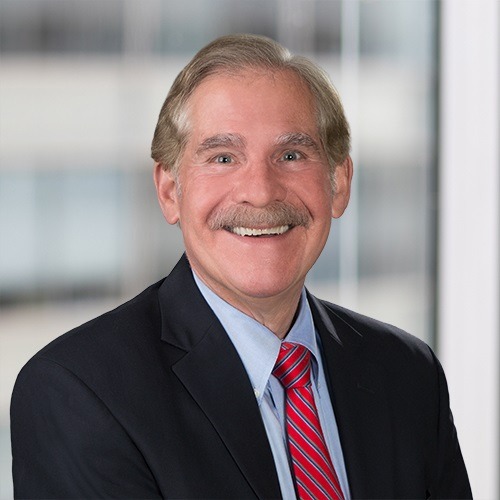
 by Alan C. Horowitz
View From the Trenches: Interview with Clifton J. Porter
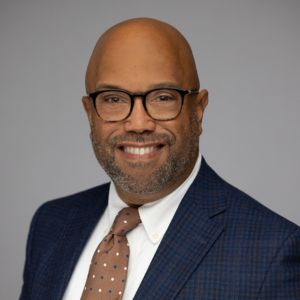
Clifton J. Porter, II, president and CEO of the American Health Care Association and National Center for Assisted Living (AHCA/NCAL
In this issue of View from the Trenches, we are pleased to interview Clifton (“Clif”) J. Porter, II, president and CEO of the American Health Care Association and National Center for Assisted Living (AHCA/NCAL). Clif previously served as AHCA/NCAL’s senior vice president for government relations for more than a decade.
AHCA/NCAL represents more than 15,000 skilled nursing facilities (SNFs), assisted living communities, and homes for individuals with intellectual and developmental disabilities.
AHCA/NCAL strives to improve the lives of residents through its public policy advocacy, professional development, and efforts at quality improvement in the delivery and quality of healthcare, particularly to our nation’s seniors.
Read on to learn more about AHCA/NCAL, its mission, and its accomplishments.
AH: Can you tell us something about the background of AHCA/NCAL, its mission and purpose?
CP: The American Health Care Association/National Center for Assisted Living (AHCA/NCAL) is the nation’s largest association representing long-term and post-acute care providers. Our mission is simple: improving lives by delivering solutions for quality care. We advocate on behalf of the profession to policymakers while providing our members with the education and tools to ensure we’re providing residents with high-quality care.
AH: Your office is in Washington, D.C. and a significant portion of AHCA/NCAL’s efforts are focused on advocacy. For example, you promote something known as The Better Way. Can you explain what that is and how it improves care for the post-acute and long-term care sector of our population as well as for people with disabilities?
CP: The Better Way is our policy agenda that offers policymakers a roadmap on how we can transform nursing home care. This is our way of offering policy and legislative solutions that are informed by the individuals who live and breathe long-term care each day. When we talked with providers across the country, we identified four key areas that became The Better Way:
- Strengthening the Long-Term Care Workforce
- Protecting Medicaid
- Reaffirming the Promise of Medicare Advantage
- Rationalizing the Regulatory Environment
These areas are where we believe the most meaningful change can and should be, to help deliver the best care possible and build a sustainable future for the sector.
AH: AHCA/NCAL has a well-respected national Quality Award Program that recognizes excellence in post-acute and long-term care facilities. That program offers recognition at the gold, bronze and silver level. Can you describe how AHCA/NCAL determines which post-acute and long-term care providers are awarded that esteemed recognition?
CP: Providers go through a rigorous application and review process based on the nationally recognized Baldrige Performance Excellence Framework. Trained examiners evaluate each application against established criteria, with the expectations becoming progressively more rigorous from Bronze to Silver to Gold. At the Gold level, organizations also undergo a site visit, and a panel of judges make the final award determination.
The Bronze Award examines an organization’s mission, vision, values, and its foundation for improvement. Silver requires providers to demonstrate effective systems for evaluating and improving their processes and outcomes. Gold is really the pinnacle of quality care. In our 30-year history of the program, only 60 organizations have received this honor, because it’s difficult to achieve. The Gold Award requires sustained excellence in areas such as leadership, strategic planning, workforce engagement, resident-centered care, and measurable results. The stories we hear from our Gold Award recipients are incredible. Sometimes, it takes years and years of work to achieve the award, but ultimately, those who achieve this award are reaping the benefits for a very long time.
I’m so proud to share that this year, there were a record number of Bronze and Silver award recipients along with our two Gold recipients. These accomplishments are not small feats – they require around the clock commitment to quality outcomes for members. We are excited to celebrate all winners at our Celebration of Excellence at Delivering Solutions 26 in Boston.
AH: As you know, many Baby Boomers are moving into post-acute and long-term care facilities. And, with the so-called “Silver Tsunami” the numbers of new admissions to SNFs are expected to increase. At the same time, we are seeing folks with higher medical acuity levels moving into SNFs, creating an even greater demand for a well-trained and qualified professional staff. AHCA/NCAL has an initiative known as Caregivers for Tomorrow that will have a positive impact on workforce issues. Please tell us something about that program and how it can affect the future of care for seniors as well as the growing workforce demands.
CP: As you mentioned, the rising demand in long-term care has created a critical need for a strong and resilient workforce. And we’re making great progress. Providers have been incredibly innovative about how they can attract and retain employees. This summer, the nursing home workforce exceeded pre-pandemic employment levels for the first time since the start of 2020. Meanwhile, staff agency use and turnover among nurses is on the decline, offering more consistent care to residents.
But the demand for care is growing faster than the available labor pool, and this is an issue for the entire healthcare system. If we want to have a nation that can care for its seniors, we need policymakers to help address this growing caregiver shortage.
Our Caregivers for Tomorrow initiative, which is part of our Better Way agenda, offers a number of workforce development solutions that are focused on building the caregiver pipeline, attracting caregivers to long-term care, and supporting their career advancement. Working with Congress, we hope to ensure older adults and individuals with disabilities have access to the high-quality care they deserve for years to come.
AH: What specific measures does AHCA/NCAL support in an effort to bolster recruitment and retention of qualified staff for SNFs, particularly nurse aides, RNs and LPNs/LVNs?
CP: Early recruitment and exposure to long-term care is critical to bolstering the workforce. Many nurses in training don’t consider our sector as a possible healthcare field, but so many of our caregivers fall in love with the profession once they explore it. We need to invest more in educational opportunities to promote careers in the profession. Through scholarships, apprenticeships, and incentives for people to work in long-term care, we can nurture a pipeline that is committed to—and excited about—the real impact they can make working with our residents.
AH: The Centers for Medicare and Medicaid Services (CMS) is the operating division with the U.S. Department of Health and Human Services that promulgates the regulations, known as the Requirements of Participation for all Medicare/Medicaid SNFs and NFs (A NF is a nursing facility that only participates in Medicaid). Every nursing facility is required to be surveyed annually and at least not more than every 15 months by “survey teams” that CMS typically contracts with the various state departments of health to conduct. It is no secret that for years, stakeholders across the spectrum have called for reforms to the survey system. AHCA/NCAL, like the Post-Acute and Long-Term Care Medical Association (PALTmed) as well as LeadingAge have called for survey reform. Recently, CMS introduced the “Risk-Based Survey.” Can you tell us why AHCA/NCAL supported that and whether additional changes to the survey system might be desirable?
CP: AHCA/NCAL has long supported a risk-based survey approach because it can make oversight more efficient and effective while maintaining strong accountability. The model uses a more focused survey process for qualifying high-performing facilities, recognizes quality improvement, and allows survey resources to be concentrated where they are needed most. We support its nationwide implementation, and the feedback on the rollout to date has been very encouraging.
AH: The current survey system has become too adversarial according to most leaders in the field and the GAO has frequently noted shortcomings in the survey system. Do you have any suggestions as to how CMS could improve the survey system for SNFs?
CP: The goal should be a balanced oversight process that protects residents, maintains accountability, and drives measurable improvement while promoting efficient use of resources. In addition to risk-based survey expansion, there are other changes that can support the delivery of high-quality care in our nation’s nursing homes. For instance, updating the Five-Star Rating System to better reflect current and recent data can help provide residents and families a clearer and timelier picture of a facility. By streamlining reporting processes and focusing on the metrics that meaningfully measure quality, CMS can help improve the use of such data, and we hope to work with them on this effort.
AH: Recently, there has been a considerable amount of attention and litigation involving Medicare Advantage (MA) programs. The issues of claim denials, delays regarding post-acute services, and lack of appropriate oversight are just some of the concerns. In response, legislation known as the Medicare Advantage Improvement Act (H.R. 8375 119th Congress) has been introduced in Congress. Does AHCA/NCAL have a position regarding that legislation and other aspects of Medicare Advantage Organizations (MAO)?
CP: AHCA/NCAL strongly supports the bipartisan Medicare Advantage Improvement Act of 2026 and has urged Congress to pass it. The legislation would protect patients from inappropriate delays and denials, align coverage criteria with traditional Medicare, increase prior-authorization transparency, require prompt payment, and prevent improper retroactive payment clawbacks. More broadly, we believe care decisions must be based on patients’ clinical needs and made by qualified medical professionals—not dictated by algorithms or overly restrictive insurer policies.
We also want to note that not all MA plans are equal. Many smaller and provider-led plans work collaboratively with providers and beneficiaries to focus on more streamlined, patient-centered approaches to care. We want to continue to support the MA plans that are working well, and we will continue to offer feedback and solutions to ensure that all seniors have timely access to the care they need.
AH: Can you describe what an I-SNP is and how that impacts the care for seniors?
CP: An Institutional Special Needs Plan is a specialized Medicare Advantage plan for individuals who live in a skilled nursing facility for at least 90 days and individuals who need a similar level of care while living in the community. These plans generally bring nurse practitioners and enhanced care coordination into the facility, helping residents receive more individualized, preventive primary care and better management of complex conditions. A recent study by ATI Advisory found that individuals enrolled in an I-SNP had fewer unnecessary hospitalizations, emergency department visits, and hospital readmissions.
AH: Artificial intelligence (AI) is becoming more and more ubiquitous. How do you see that impacting the care of folks, especially in SNFs and assisted living facilities?
CP: Artificial intelligence has the opportunity to revolutionize care in the profession, and we are focused on responsible adoption of these technologies to enhance patient care. There are really interesting applications of AI, such as predictive analytics, which can help teams identify risks to patients earlier, including infections, falls, hospitalizations, and pressure injuries. This could be a game changer. It would allow care teams to intervene sooner to keep residents safe and healthy as well as helping caregivers spend more time with their residents by reducing administrative tasks.
There are plenty of examples of AI enhancing residents’ quality of life and helping caregivers gather and assess useful data. At the same time, it’s critical that new technology is implemented thoughtfully and responsibly. It should support clinical decisions, not replace them, particularly in long-term care settings where human decision-making and compassion are critical.
AH: Clif, you are certainly one of the most high-profile leaders in the post-acute and long-term care space. Our readers would be interested in learning what led you to dedicate your impressive career to helping our nation’s most vulnerable segment of the population.
CP: I’ve now worked in long-term care for 37 years, and I started my career in the profession as a college student. When I started as a volunteer at my local nursing home, I had no clue that it would end up being my life’s work. But I am so grateful that this was my journey. Ultimately, I worked my way from that volunteer role up to serving as an administrator and then a regional director. I loved each position for different reasons.
But more than anything, I was able to bear witness to the importance of the work and the extraordinary commitment of caregivers and staff. This profession is filled with people who love what they do, and what a gift it is to now spend my time ensuring that we are prepared as a profession for the future.
My experience has given me a complete view of the long-term care profession. I know what it’s like to hold the hand of a resident at their bedside. I know about interacting with surveyors and answering calls in the middle of the night. And I know how to advocate for the profession on Capitol Hill. My purpose is to continue making a difference for our residents, and I’m honored to do that at a national level with our collective team at AHCA/NCAL.
AH: What trends regarding the care of seniors do you see emerging?
CP: We continue to learn, adapt, and evolve as a profession, and we’re seeing a lot of changes in care. One thing that long-term care providers need to embrace is evolving reimbursement models. Federal policymakers and payors are continuing to move away from fee-for-service toward value-based care arrangements. CMS has said that their goal is to have as many Medicare beneficiaries as possible in some form of accountable value-based arrangement.
So, we need to be able to demonstrate how we improve patient outcomes and create savings. And we need to think about each patient’s episode of care, not just the care we provide when they enter our buildings.
There’s a whole alphabet soup of programs and models out there. We talked about I-SNPs, but there are also ACOs, MSSP, LEAD, and others. Understanding how our facilities can participate in this new paradigm and how they can form successful partnerships with up and downstream providers is really key to thriving in this new environment. We offer a Population Health Management Summit in May that I encourage providers to attend to learn more.
AH: If you had a magic wand and could change anything about our current health system, what would that be?
CP: As a healthcare system, we need to think together on workforce solutions because demographic changes will affect all of us. For example, if hospitals cannot discharge patients to skilled nursing facilities because of caregiver shortages, that causes hospital backlogs, and our patients can’t begin their recovery. And when the pool of available caregivers to hire is scarce, we start competing against each other: hospitals, home health, assisted living, and more. That’s not the environment we want for our nation’s seniors or our healthcare system.
If I could snap my fingers, I would have Congress pass a comprehensive “new deal” workforce package similar to our Caregivers for Tomorrow initiative and in partnership with all healthcare providers. We must come together and work collectively to ensure that every patient can access care in the setting best fit for their needs. While we have challenges, I believe the future is bright, and we will do our part to make this hope a reality.
Note: The author sincerely thanks Mr. Porter for taking the time to share his thoughts and insights and thanks him and the AHCA/NCAL for all they do to promote the quality of care our nation’s seniors deserve and receive.
Alan C. Horowitz, Esq., RN, is principal at Alan C. Horowitz & Associates and a member of the IASC Editorial Advisory Board. He focuses his legal practice on regulatory compliance and risk management for skilled nursing homes, hospices and home health agencies and manages cases where the Centers for Medicare and Medicaid Services (CMS) has imposed an enforcement action.
He is a former partner at Arnall Golden Gregory LLP, and also served as assistant regional counsel Office of the General Counsel, U.S. Department of Health and Human Services. As counsel to CMS, he was involved with hundreds of enforcement actions and successfully handled appeals before administrative law judges, the HHS Departmental Appeal Board and in federal court. He also has clinical healthcare experience as a registered respiratory therapist and registered nurse. He can be reached at AlanHorowitzLaw.com.
Related Articles



Topics: Advocacy , Alan C. Horowitz , Clinical , Featured Articles , Medicare/Medicaid