
 by Paige Cerulli
Make Every Message Matter: How Communities Can Use AI to Personalize Marketing and Outreach
Personalization has become a cornerstone of marketing today. From delivering messages that resonate with specific audiences to improving conversion rates and maximizing return on investment, it plays a critical role in effective communication for organizations today. With recent advances in AI, senior care communities now have access to powerful tools that make personalization more scalable and impactful than ever before. By leveraging AI, communities can maximize the effectiveness of their marketing efforts.
Read on to discover how AI-driven personalization can help senior care communities connect more meaningfully, improve engagement, and build trust with their audiences.
Why Personalization Matters

Adam Hertzman, president of Adartova Consulting LLC
Personalization influences marketing outcomes across every industry, but it holds particular weight in senior care. Limited budgets mean every marketing dollar must work harder, and tailored messaging helps ensure it does. Adam Hertzman, president of Adartova Consulting LLC, emphasizes that personalization increases both efficiency and effectiveness. “Personalization in marketing is one of the best ways to ensure both that you are getting the bang for your marketing buck and that the right people are seeing your message,” he says. “We are very much in a one-to-one marketing era now, and buyers have come to expect messages that address their specific needs.”
Senior care communities also serve diverse audiences with varying needs—from independent living to memory care—which makes generic messaging ineffective. Mauricio Acuna, co-founder at Impacto, notes that generic, automated messaging can feel dehumanizing and even confusing when it doesn’t align with a recipient’s situation. By contrast, personalized outreach helps build trust—an essential element when individuals and families are making deeply emotional decisions.
How Senior Care Communities Can Use AI to Personalize Marketing and Communication
AI is rapidly transforming how senior care organizations approach marketing. Marie Jablonski, corporate director of marketing at Masonicare, believes AI can be a “gamechanger” for senior care communities, enabling them to better understand prospective residents and their families. “By analyzing data from inquiries, engagement, preferences, and even online behavior, AI can identify patterns that help tailor messages to individual needs and life circumstances, making outreach far more relevant and timelier,” she says.

Mauricio Acuna, co-founder at Impacto
AI can enhance both outbound and inbound communication strategies. For instance, marketing teams can use AI to generate multiple variations of ads and test which ones resonate most with their audiences. “These tools are increasingly built into applications that senior care organizations already use, like Canva and Adobe InDesign,” says Hertzman.
On the inbound side, AI helps teams respond more efficiently and thoughtfully. Acuna highlights how AI can categorize inquiries and tailor follow-ups accordingly. “For example, it can group enquiries by specific needs, such as memory care or independent living, and tailor follow-up emails, SMS, or phone calls,” he says. “AI also helps marketing teams to respond quickly and consistently, which is essential when enquiries are emotional.”
Beyond responding to inquiries, AI can help senior care communities anticipate needs throughout the customer journey. By using AI, communities can provide the right information at the right moment—whether someone is just beginning to explore options or evaluating specific services.
“This level of personalization not only increases engagement, it builds trust, demonstrating that the community genuinely understands and values each individual’s journey,” says Jablonski. “AI helps to transform marketing from a one-size-fits-all approach into a thoughtful, data-informed conversation, helping senior care communities connect more meaningfully with the people they serve.”
Notable Uses of AI in Senior Care
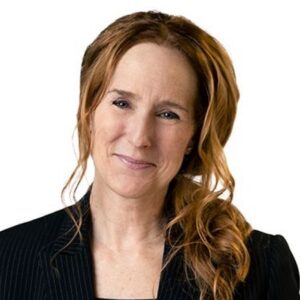
Ann Collette, chief of strategy at Masonicare
Many senior care communities are already finding innovative ways to apply AI. For instance, AI-powered tools can help communities promptly answer inbound emails, providing the speedy responses that individuals have come to expect. Hertzman recalls a senior care community that integrated its AI email response system with its CRM, allowing responses to reflect a prospect’s history, such as whether they had already visited the community or were making a first inquiry. Hertzman advises maintaining transparency by clearly indicating when AI is used in responses.
Ann Collette, chief of strategy at Masonicare, notes that some communities use AI to create highly personalized experiences, including customized virtual tours and targeted content addressing specific concerns like memory care or independent living. Some communities also use AI chatbots to provide immediate, personalized responses to inquiries, which creates interactions that feel more human and reassuring.
“These approaches don’t just improve efficiency. They elevate the experience, showing that the community truly understands each individual, and positioning AI as a tool for meaningful engagement rather than just automation,” says Collette.
Potential Drawbacks to Using AI for Marketing
While AI offers significant advantages, communities should be aware of the potential risks that come with this technology. Acuna warns that AI messaging can become over-automated and feel too scripted. Audiences might find those messages as being insensitive, potentially making them lose trust in the community.

Marie Jablonski, corporate director of marketing at Masonicare
Hertzman stresses the importance of transparency and governance. Communities should establish a clear public AI policy outlining how and when AI is used, what information is shared, and how to distinguish between human- and AI-generated content. Since AI can occasionally produce inaccurate information, it’s essential to carefully test it and include a disclaimer that individuals should check the actual website to verify details.
Jablonski cautions communities to use AI thoughtfully and highlights considerations surrounding privacy, data security, and the ethical use of AI. “Collecting and analyzing sensitive information about residents and families requires strict safeguards to ensure trust isn’t compromised,” she says.
How Communities Can Begin Using AI in Marketing
For organizations just getting started, the best approach is often to build on tools they already use. “Platforms like Google Enterprise and Microsoft 365, design tools like Canva and Adobe InDesign, CRMs like Salesforce and Airtable, and even EHRs like Advantage Anywhere and MatrixCare already have AI features built in,” says Hertzman.
Similarly, Acuna suggests starting small, using AI for simple tasks and workflows like organizing inquiries or generating staff summaries, and then expanding AI use into other marketing areas.
Jablonski emphasizes the importance of starting with clear goals and a focused strategy. Communities should identify what they want to achieve and the data needed to support those efforts. “Start small with targeted initiatives, whether it’s personalized email campaigns, tailored content for prospective families, or AI-assisted recommendations for residents’ activities, and measure results along the way,” she advises.
Most importantly, maintaining a human-centered approach is critical. “AI should amplify your team’s expertise and relationships, not replace them,” says Jablonski. “The best approach is thoughtful, incremental, and human-centered, using AI to create more relevant, timely, and meaningful connections rather than just automating tasks.”
Paige Cerulli is a contributing writer to i Advance Senior Care.
Related Articles








Topics: Featured Articles