

 by Paige Cerulli
How Robotic Pets Bring Comfort and Connection to Senior Care Residents
Step into Hebrew Home Greater Washington (HHGW) and you’re likely to find residents caring for, stroking, and spending time with pets. The pets respond to touch, purr or bark, and snuggle with residents, but they don’t require feeding, walking, or trips to the vet.
Through a recent CMS grant, HHGW purchased 44 robotic dogs and cats to share among its rehab, long-term care, and memory care units. The pets have quickly become a source of companionship and connection while giving some residents a renewed sense of purpose.
Read on to learn how HHGW introduces robotic pets based on individual resident needs, the benefits the pets can provide, and what the community has learned from implementing the program.
Bringing Robotic Companions to the Community

Annie Tran, recreational therapy director at Hebrew Home Greater Washington
HHGW collaborated with Ageless Innovation to bring the robotic pets to the community, according to Annie Tran, HHGW’s recreational therapy director. Before seeing the pets in action, Tran wasn’t sure how residents would respond, but she was quickly surprised by how realistic they looked and behaved.
These robotic pets are a significant departure from the toy dogs and cats many people may remember from childhood. “I’m so amazed by these pets,” says Tran. “They look so real. If you saw me holding one, you’d never think it was robotic.”
Touch sensors allow the pets to respond to residents in several ways. When a resident pets an animal’s head, for example, the pet may move in response. The pets can lift their front legs, while the cats can purr on demand. They can also perform certain actions without making sounds at night, allowing residents to interact with them without disturbing others who are sleeping.
HHGW, part of Charles E. Smith Life Communities, is home to more than 1,100 older adults, so the robotic pets needed to appeal to residents with a wide range of interests and needs. Tran knew many residents had a strong connection to animals and believed the pets could help recreate some of those meaningful experiences.
“A lot of residents grew up with animals,” she explains. As residents age, circumstances may prevent them from continuing to care for a pet, but memories of beloved animals can remain powerful. “Animals evoke those memories,” says Tran. “I wanted to bring that to them. I wanted them to be able to have that experience of remembering and still being able to have a pet, even in a different way.”
Finding the Right Approach for Each Resident
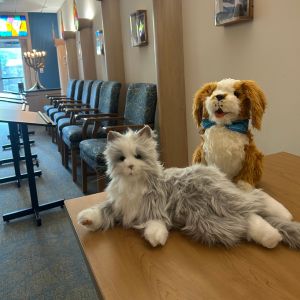
Image copyright Charles E. Smith Life Communities. Used with permission.
The way staff introduce the robotic pets can play an important role in how residents respond to them. Tran quickly realized that there isn’t a single approach that works for everyone, so she tailors each introduction to the individual resident. Some residents are fascinated by technology and view the pets as an interesting innovation. “They think it’s so cool,” she says, and engage with the pet out of fascination.
Other residents perceive the pets as real animals, requiring a different approach. “I can’t tell them it’s a robotic pet,” Tran explains. “I have to tell them it’s my cat Molly and I ask them if they’d like to say hello.” Residents may ask the pet’s name or what it likes to eat. Those interactions often bring back memories of pets they previously owned, prompting residents to share stories and smile as they connect with the animal.
A resident’s emotional needs can also shape how Tran introduces a pet. If a resident is feeling lonely but is alert and likely to recognize the animal as robotic, Tran may focus on its technology. She might point out features such as the pet’s voice sensors or blinking eyes, then invite the resident to spend some time with it and share what they think.
For residents who want to feel needed, Tran may take another approach. She might tell a resident that she needs to work and ask whether they can watch her dog for a few hours. The interaction gives the resident a responsibility while creating an opportunity to spend time with the pet.
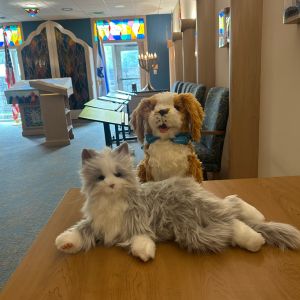
Image copyright Charles E. Smith Life Communities. Used with permission.
Finding the right approach has required some trial and error. Once Tran determines what works for a particular resident, she can train staff on how to introduce the pet to that individual. Understanding residents’ backgrounds is essential. Tran knows which residents prefer dogs or cats and uses that information to select an appropriate pet. Staff also need to know whether a resident has recently lost a pet, since introducing a robotic animal in that situation may not be appropriate.
Even a successful approach may need to change from day to day. A resident may perceive the pet as a real animal one day and recognize it as robotic the next. Staff must adjust their approach in real time and consider whether interacting with a robotic pet is likely to be comforting or stressful for the resident at that moment.
Creating Connection and a Sense of Purpose
The robotic pets have provided residents with companionship and meaningful interaction, particularly as some older adults begin spending more time alone. “The pets can’t place a loved one, but something as simple as someone sitting next to you or in your bed, it makes the resident feel less alone,” explains Tran.
Even residents who understand that the animals are robotic can become fascinated with them. Others interact with the pets as though they are real, sometimes refusing to go to lunch until they have fed their pet. Based on these interactions, Tran believes the animals can meaningfully enhance residents’ quality of life.

Image copyright Charles E. Smith Life Communities. Used with permission.
Navigating the Challenges of Sharing
Sharing 44 robotic pets across the community also requires careful management. Some residents become territorial about the animals, while others may not understand that a pet temporarily “belongs” to another resident.
To retrieve a pet without upsetting a resident, Tran has developed strategies that fit naturally into the interaction. She might say, “Hey, your cat is dirty. Can I clean her and bring her back after lunch?” In other situations, she may say she needs to walk or feed the pet. Through experience, Tran has also identified residents who benefit from having a pet of their own rather than sharing one.
What’s Next for Robotic Pets in Senior Care Settings
While the pets are already highly realistic and interactive, Tran sees opportunities for the technology to become even more sophisticated. The pets shed, so the community keeps lint rollers on hand, and Tran would like future versions to perform additional actions, such as lying down or sitting on command.
Robotic pets could eventually become more common outside senior care communities as well. “Most people don’t know about the pets in the smaller market yet, but I could see them as being beneficial for an older person who’s living with family,” she says.
As awareness of robotic pets grows and the technology continues to evolve, these animals could become a more familiar presence in senior care communities and private homes. For older adults who want the companionship of an animal but cannot safely or practically care for a live pet, robotic pets may offer another way to experience connection, comfort, and the familiar joy of having an animal nearby.
Paige Cerulli is a contributing writer to i Advance Senior Care.
Related Articles









Topics: Activities , Featured Articles , General Technology , Information Technology , Operations